
Metallic and masonry primary substations: which is better
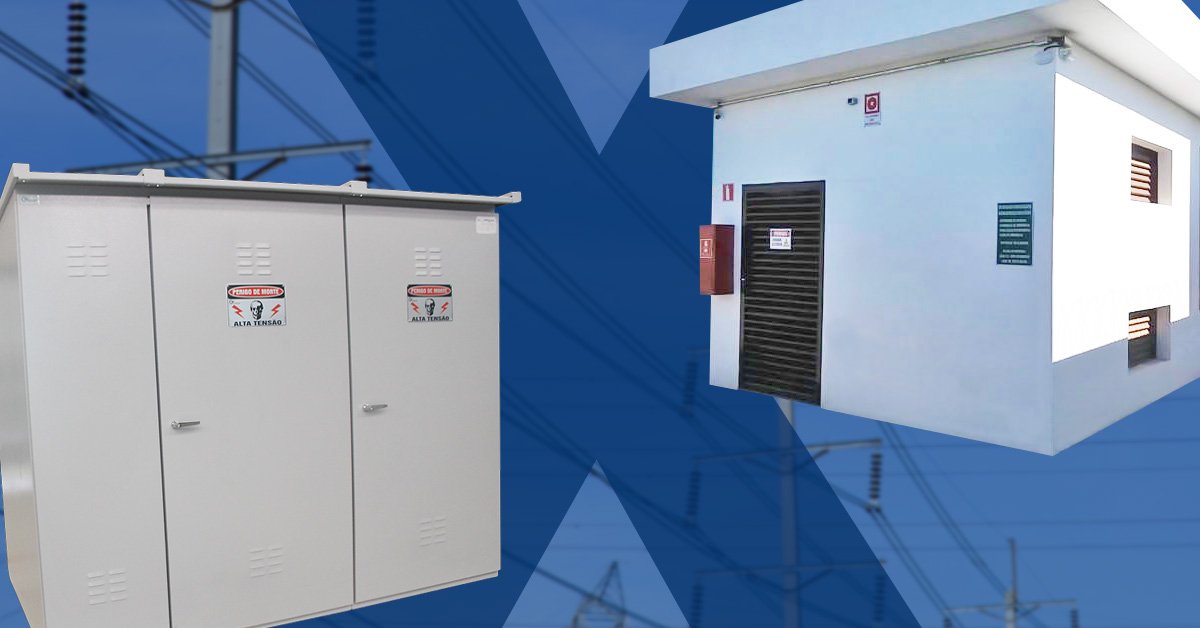
Thus, these structures are responsible for housing the electrical energy transformation equipment that makes the connection between the public distribution network and the place where the energy will be consumed.
However, when choosing the best option for the project, doubts often arise about which type of substation is the most suitable.
In this content, we will present the differences between metallic primary substations and masonry primary substations and help you choose the best option for your project. Let's go?
Metallic primary substations
Metallic primary substations are structures used in the distribution of electrical energy in various sectors, such as:
In this way, they are responsible for housing the electrical energy transformation equipment. Thus, they are connected to the public distribution network.
Check out 5 benefits of metallic primary substations:
1. Mechanical resistance
Metallic primary substations are highly resistant to impacts, weather, and chemical agents. Thus, this ensures greater durability and safety for the housed electrical equipment.
2. Ease of maintenance
Metallic primary substations are built with high-quality and durable materials. Therefore, this reduces the need for maintenance and increases the lifespan of the electrical equipment.
3. Time and money savings
The construction of metallic primary substations is carried out in the factory. So, this allows a reduction in installation time and greater efficiency in the use of resources. In addition, we achieve a good reduction in project costs.
4. Fire protection
Metallic primary substations are designed to withstand high temperatures and are fireproof. Therefore, this increases the safety of people working near these structures.
5. Customization
Metallic primary substations can be customized according to the project's needs. So, this allows greater flexibility in their use and ensures better adaptation to different environments.
Masonry primary substations
Masonry primary substations are built from bricks, concrete, and other construction materials. So, they are heavier and have lower mechanical resistance compared to metallic ones.
This means that masonry substations can be more susceptible to structural damage, such as cracks, for example. In addition, the construction of these substations is more time-consuming and complex, which can increase the total cost of the project.
Metallic and masonry primary substations: which is better?
In terms of cost, metallic primary substations are more affordable than masonry ones, since their mass production allows for cost reduction. In addition, their installation is faster and simpler, contributing to a reduction in the final value of the project.
Another advantage of metallic primary substations is their ease of maintenance. Since they are built with resistant materials, the need for maintenance is reduced.
Finally, metallic primary substations also offer greater safety. After all, they are built with materials that ensure greater resistance to impacts and are designed to withstand extreme weather conditions.
We are specialists in primary substation design and assembly
Trifásica Elétrica is a company specialized in primary substation designs and assemblies. With years of experience in the market, we offer customized and high-quality solutions.
Trifásica Elétrica offers various types of primary substations, from conventional to the most elaborate ones, such as SF6 and CPMT substations. Among the available options are also simplified substations and solar skids, which are innovative and efficient projects for the generation of electrical energy from renewable sources.
Frequently asked questions
Which is faster to install?+
The metallic one (metal-clad switchgear), as it is modular and standardized; the masonry one requires civil works.
Is the metallic one safer?+
The grounded metallic segregation (IEC 62271-200) offers a high level of operational safety.
Trifásica Elétrica distributes medium voltage materials throughout Brazil.
Request a quote