
Metal-clad switchgear: what are the existing types and how to choose
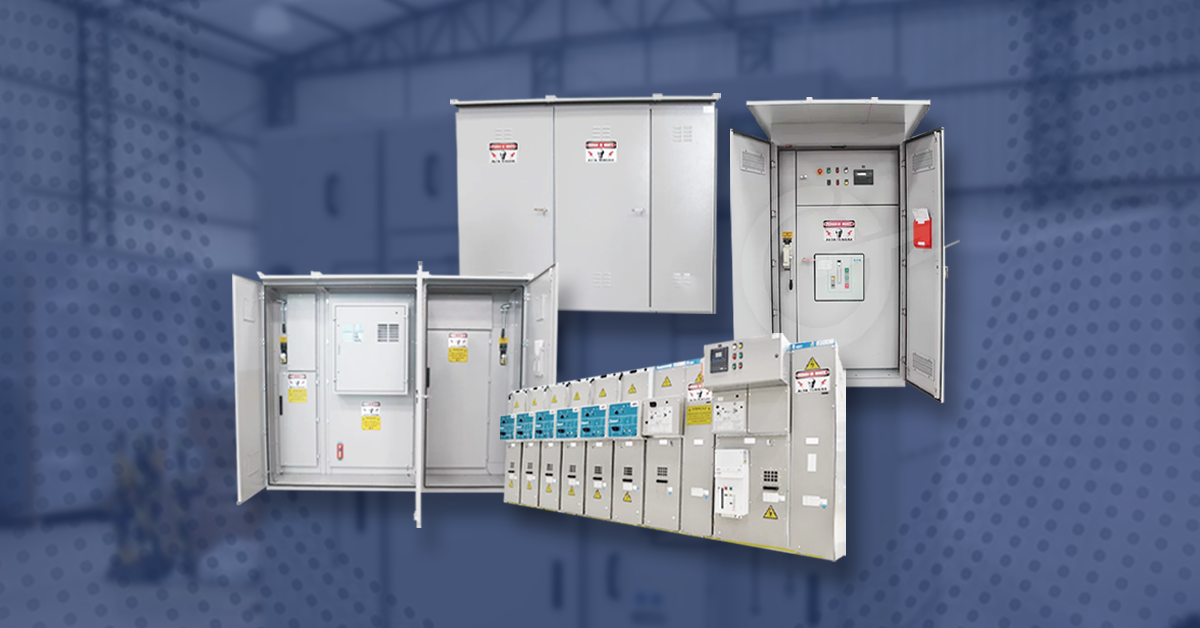
The main function of the primary substation is to reduce the voltage of electricity coming from the high voltage grid to safe levels, suitable for use in buildings. In addition, it can house protection equipment (such as circuit breakers and transformers) to ensure the stability and safety of the electrical power supply.
Thus, primary substations play a fundamental role in the efficient and safe distribution of electricity. Let's learn more about the subject? So, stay with us!
What are the types of primary substations?
There are several types of primary substations, each designed to meet specific electrical power distribution needs. Discover some of them.
Conventional primary substation
A conventional primary substation is a structure that houses equipment such as transformers, circuit breakers and disconnect switches. Thus, it reduces the high voltage of the electrical grid to safe levels suitable for use.
This configuration is widely used due to its efficiency and reliability in the delivery of electricity. In this way, it also protects against overloads and short circuits and ensures the safety of electrical installations.
Simplified primary substation
A simplified primary substation is also composed of transformers and protection devices, but in a more basic configuration than conventional primary substations.
It is frequently used in smaller applications, such as small commercial buildings or rural areas, where the electricity demand is limited and does not require sophisticated power distribution equipment.
Primary substation with SF6 insulation
A primary substation with SF6 insulation is a type of electrical structure that uses sulfur hexafluoride (SF6) gas as an insulating medium. This gas is highly effective in preventing electrical arcs and offers greater safety compared to conventional insulators.
These substations are frequently used when installation space is limited, as they are more compact than conventional oil-insulated substations. In addition, it is also recommended for aggressive/critical environments, due to its greater resistance to environmental factors.
Multi-metering primary substation with air insulation
A multi-metering primary substation with air insulation is an electrical structure that integrates advanced metering and control features, while using air as an insulating medium. This combination allows efficiently monitoring and managing electrical power consumption in industrial or commercial facilities.
Air insulation, although less complex than other options, maintains the safety and reliability of the system. So, these substations are designed to provide accurate information about electricity consumption, being common in industrial and commercial buildings, and electrical substations. Thus, they facilitate the control and optimization of energy use.
> You might also like to read: metal and masonry primary substations: which is the best?
Trifásica Elétrica specializes in the supply of primary substations in voltages of 15, 24 and 36kV. All of them are certified and built according to current standards.
In addition, we serve the entire Brazilian territory and are ready to assist you with your electrical power distribution demands.
Frequently asked questions
What is the difference between metal-clad switchgear and masonry substation?+
The metal-clad switchgear is metallic, modular and with high segregation; the masonry substation is a civil construction that houses the equipment.
Is the switchgear custom-made?+
Yes, according to the single-line diagram, the voltage class and the required functions. Request a quotation with the project.
Which standard applies?+
IEC 62271-200, for medium voltage switchgear and controlgear assemblies.
Trifásica Elétrica distributes medium voltage materials throughout Brazil.
Request a quote