
Miniature circuit breaker, molded case and air circuit breaker: where to use each
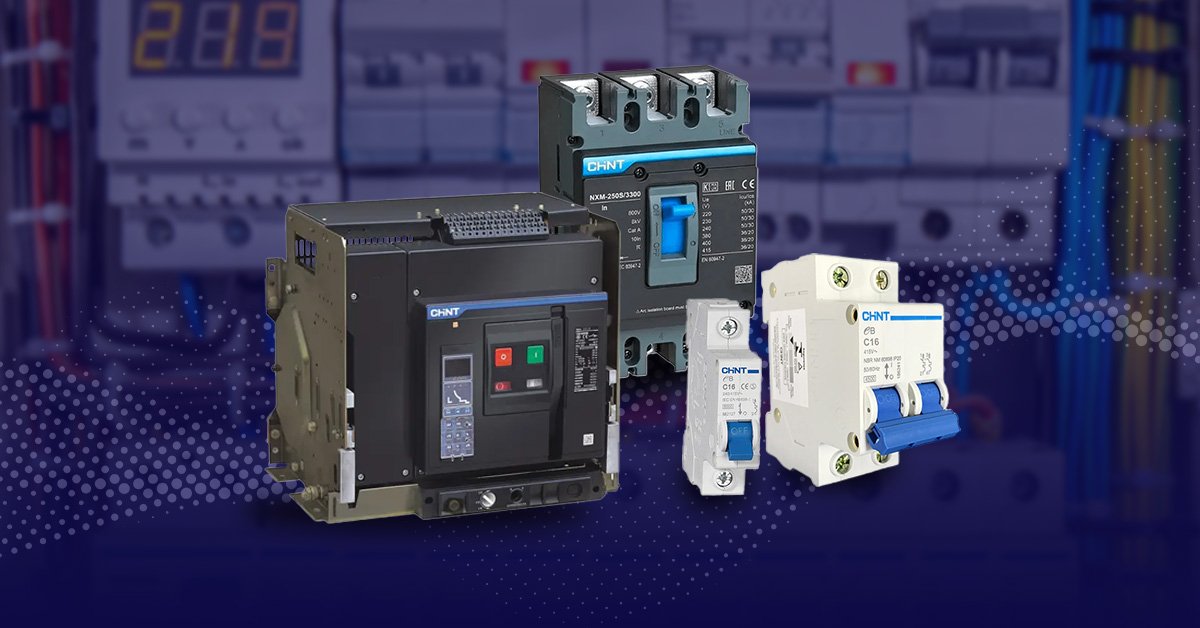
In this content, we will explore the three main types of circuit breakers: miniature circuit breakers, molded case circuit breakers, and air circuit breakers so you can choose the best one for your project. Stay with us!
Miniature circuit breakers
Miniature circuit breakers are compact electrical protection devices designed to interrupt currents in low voltage circuits. They are widely used in residential and commercial installations to protect against overloads and short circuits.
The interruption capacity of a miniature circuit breaker varies between 2A and 125A, depending on the manufacturer and the application. The NBR NM 60898 standard defines the instantaneous tripping curves (B, C, and D) of miniature circuit breakers, adjusting according to the circuit's protection needs.
It is important to note that miniature circuit breakers are not suitable for the protection of electric motors, as they may trip during the starting current. For terminal circuits in buildings and similar systems, miniature circuit breakers are ideal, providing efficient and safe protection with easy operation by unqualified persons.
Thus, when installing, it is essential to consider the interruption capacity and the correct specification to avoid undersizing and ensure the safety of the installations.
Molded case circuit breakers
Molded case circuit breakers are robust protection devices developed to interrupt high electrical currents in low voltage circuits. Their main characteristic is the ability to withstand and interrupt large current values, with ranges varying from 16A to 3200A.
Thus, they are widely used in industrial and commercial environments and in power distribution boards. After all, they offer adjustable thermal and magnetic protection, allowing greater precision in protection against overloads and short circuits.
Molded case circuit breakers are essential in locations where high interruption capacity and robustness are required — such as in motor circuits, generators, and power distribution systems.
In addition, there is the possibility of adding accessories and adjusting their settings. Thus, these circuit breakers are highly flexible and adaptable to the specific needs of each installation.
Air circuit breakers
Air circuit breakers are high-capacity electrical protection devices. They are used in large-scale installations, such as industries, power plants, and substations.
These circuit breakers are designed to withstand very high electrical currents, being able to conduct up to 6300A and interrupt short-circuit currents exceeding 300kA, depending on the model.
Air circuit breakers offer a wide range of settings and protections, including overload (L function), short-time delay short circuit (S function), instantaneous short circuit (I function), neutral conductor protection (N function), and ground fault (G function).
Therefore, these circuit breakers are selective, allowing greater control and coordination in the protection of the electrical system. Furthermore, they can be equipped with various accessories and communication modules.
Comparative table between miniature, molded case, and air circuit breakers
To understand more simply the 3 models of circuit breakers we are working with in this content, we have prepared the following table:
Trifásica Elétrica offers a wide range of low voltage circuit breakers, including miniature circuit breakers, molded case circuit breakers, and air circuit breakers.
Buy online easily and safely or contact us to discover all our electrical protection solutions!
Frequently asked questions
Which one to use in a residential panel?+
The miniature circuit breaker (DIN), sized for terminal circuits.
MCCB or ACB?+
MCCB for intermediate currents in panels/feeders; ACB for high currents and power input.
Trifásica Elétrica distributes medium voltage materials throughout Brazil.
Request a quote